

October 5, 2026
Apollo phone numbers · 8 credits a find, and the bill for the misses
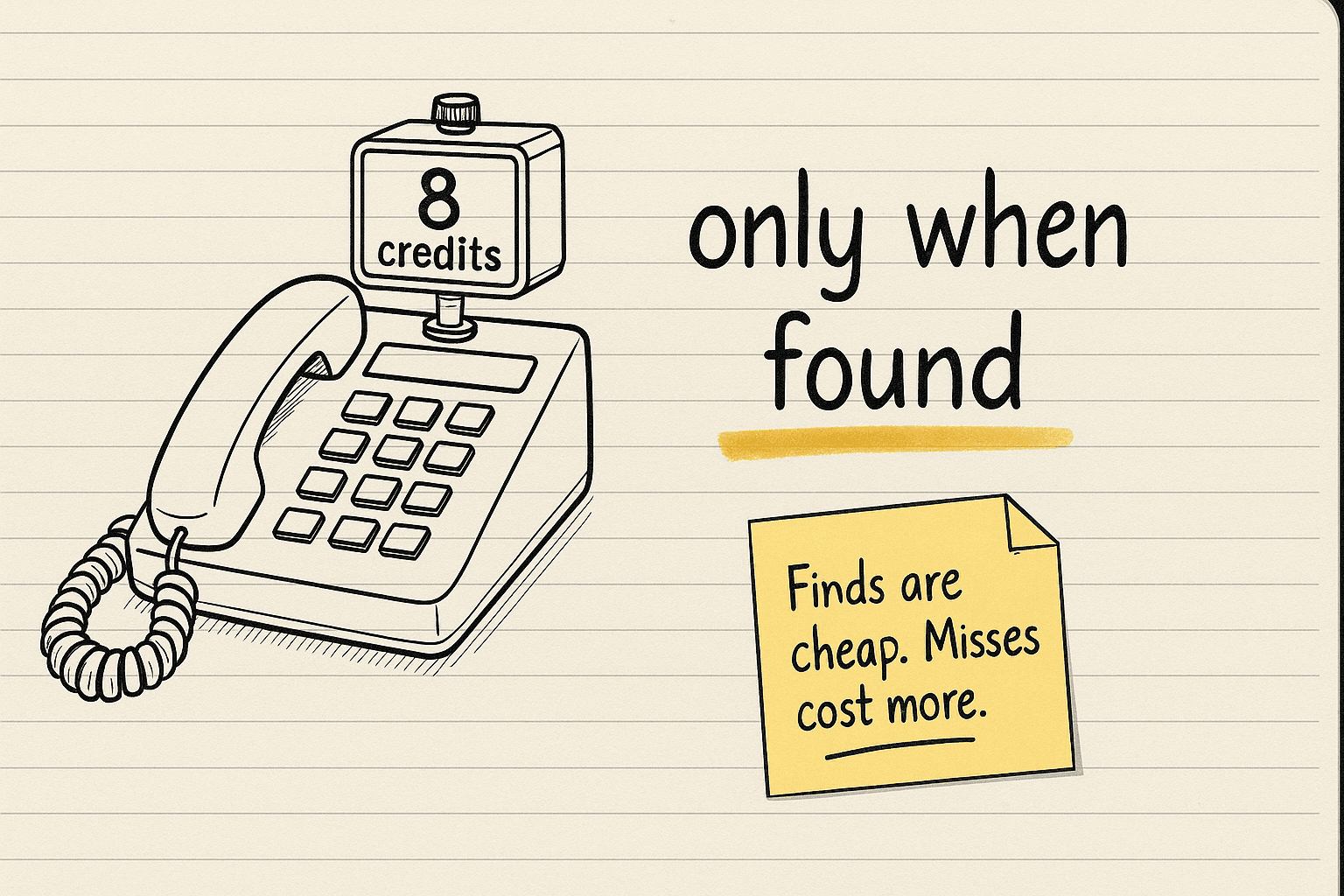
Apollo charges 8 credits for a phone number, only when it finds one. Voicemail bills as a connected call. The costly part is the numbers it never finds. FullEnrich for mobiles, Apollo for the first pass, BetterContact as backup.
Matthew Provins ran a small test with Apollo phone numbers and posted it on LinkedIn in October 2025. He used two reps with the same ideal customer profile and Apollo data only.
One rep used Apollo's parallel dialer. A parallel dialer rings several numbers at once and connects the rep to whoever picks up. Over three days that rep made about 430 dials. Result: 2 conversations and 0 meetings.
The other rep dialed 50 numbers by hand in one day. Result: 3 conversations and 1 meeting.
Hold that loosely. It's two reps, and Provins says in the same post that he's building his own dialer. Still, it points at the right thing to measure: what each phone number really costs you in Apollo once you count the calls and the gaps.
Apollo charges for phones in two visible places. A third cost never shows up on the invoice.
A reveal costs 8 credits, and only on a find
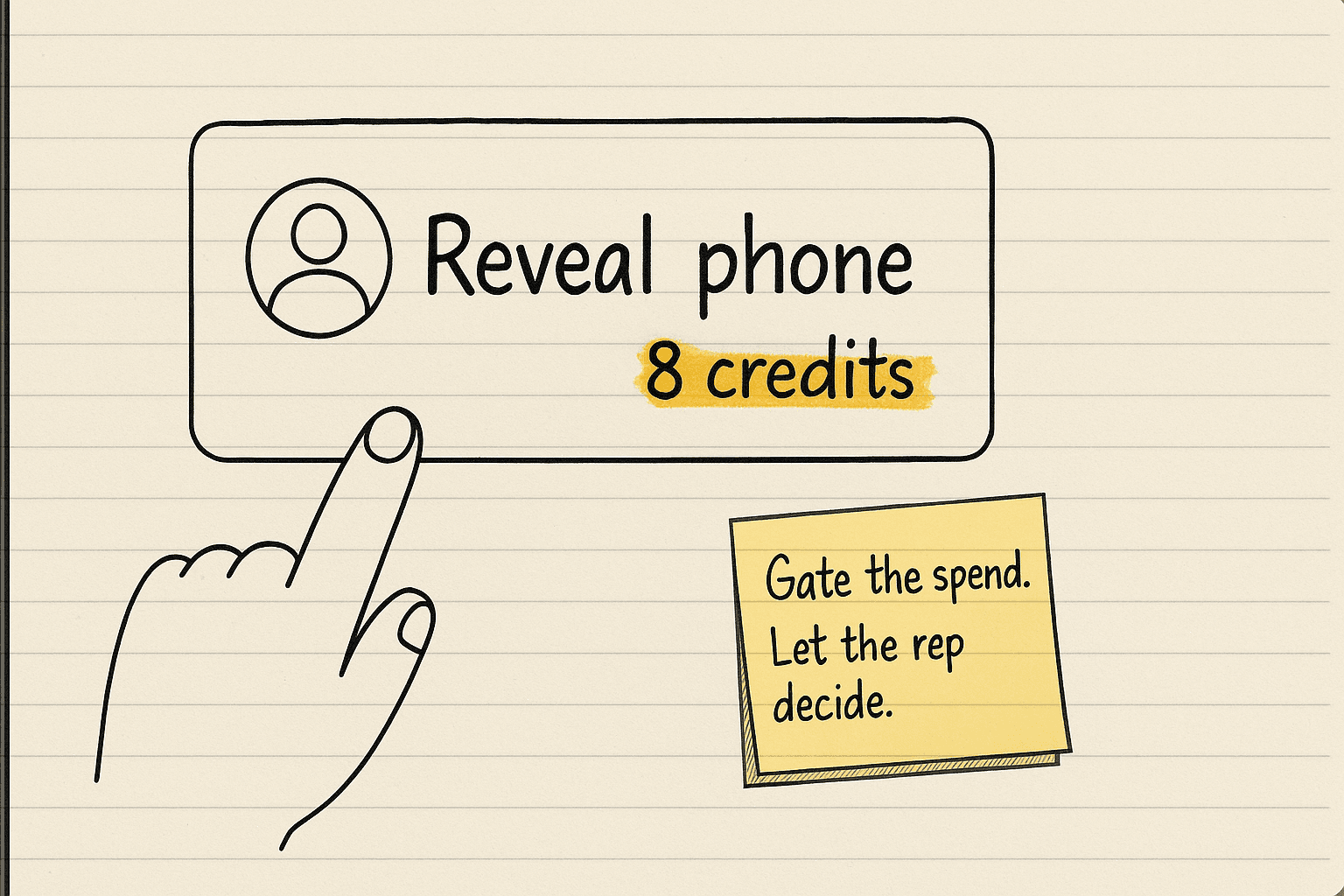
In Apollo, a reveal means paying credits to unlock a contact's phone number or email so you can see it.
Apollo's own help says phone credits get used only when it finds and verifies at least one number. Its API docs put a returned mobile at 8 credits. You pay once per contact, even when there are several numbers. If nothing comes back, you pay 0.
Two smaller rules matter. Office and HQ numbers are free when Apollo finds them alongside an email request. Personal numbers still bill when they sit on the do-not-call list (DNC), the registry of people who opted out of sales calls. You can end up paying for a number your team may not be allowed to dial.
Apollo doesn't refund mobile credits. Bounced verified emails get a refund within 30 days. Mobiles never do.
So a miss costs zero credits. That sounds great until you remember the rep still needs the number.
Voicemail counts as a call
Every paid Apollo plan now includes the dialer. The advanced add-on is where parallel dialing, local presence, and international calling live.
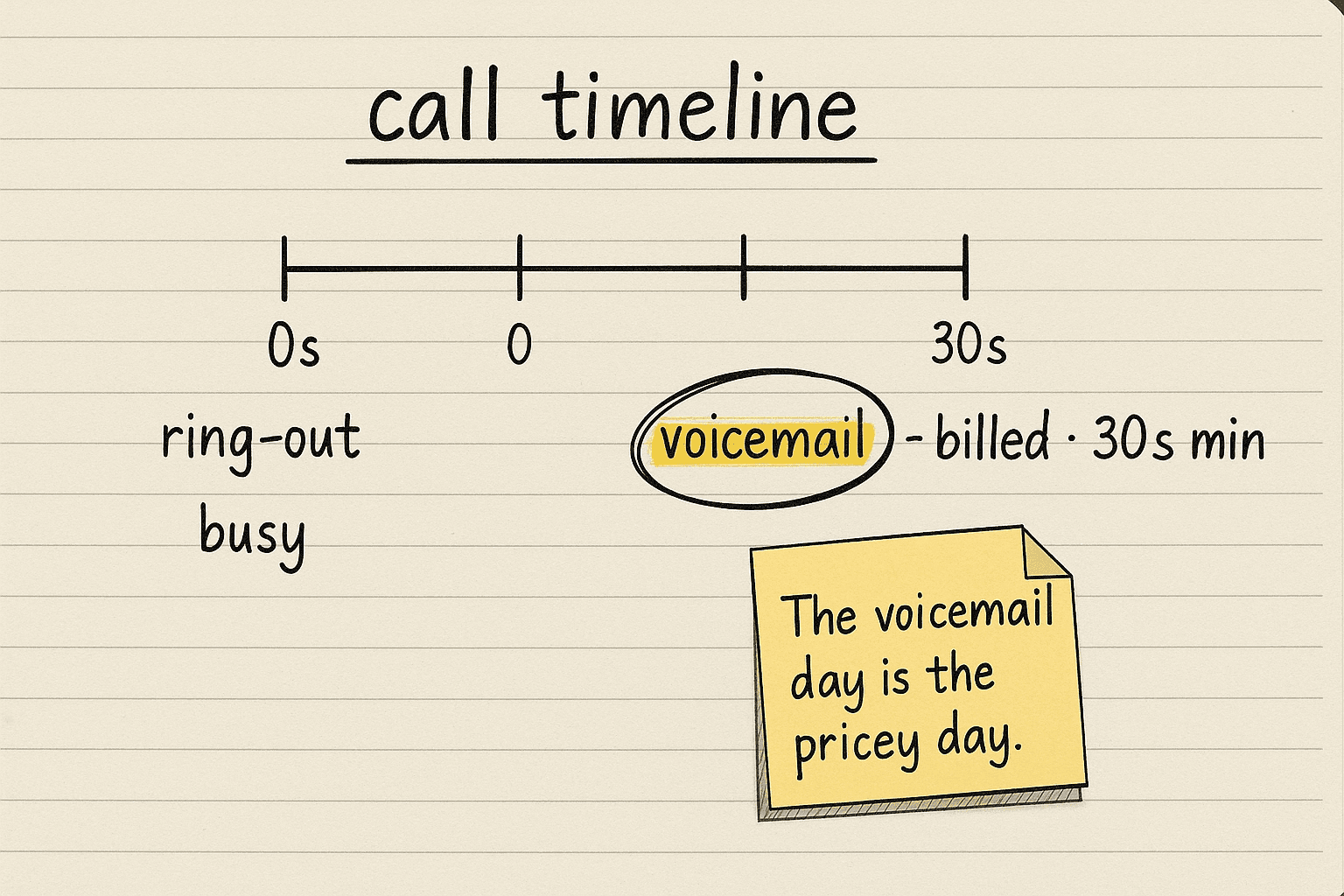
Calls bill when they connect. Apollo counts voicemail and answering machines as connected. Each call has a 30-second minimum, then rounds up in 30-second steps. Ring-outs, busy signals, failed calls, and canceled calls cost 0.
That flips the usual guess. A dialer day full of voicemails is the expensive day. A day of no-answers is the cheap one.
The upper bound for one rep's month
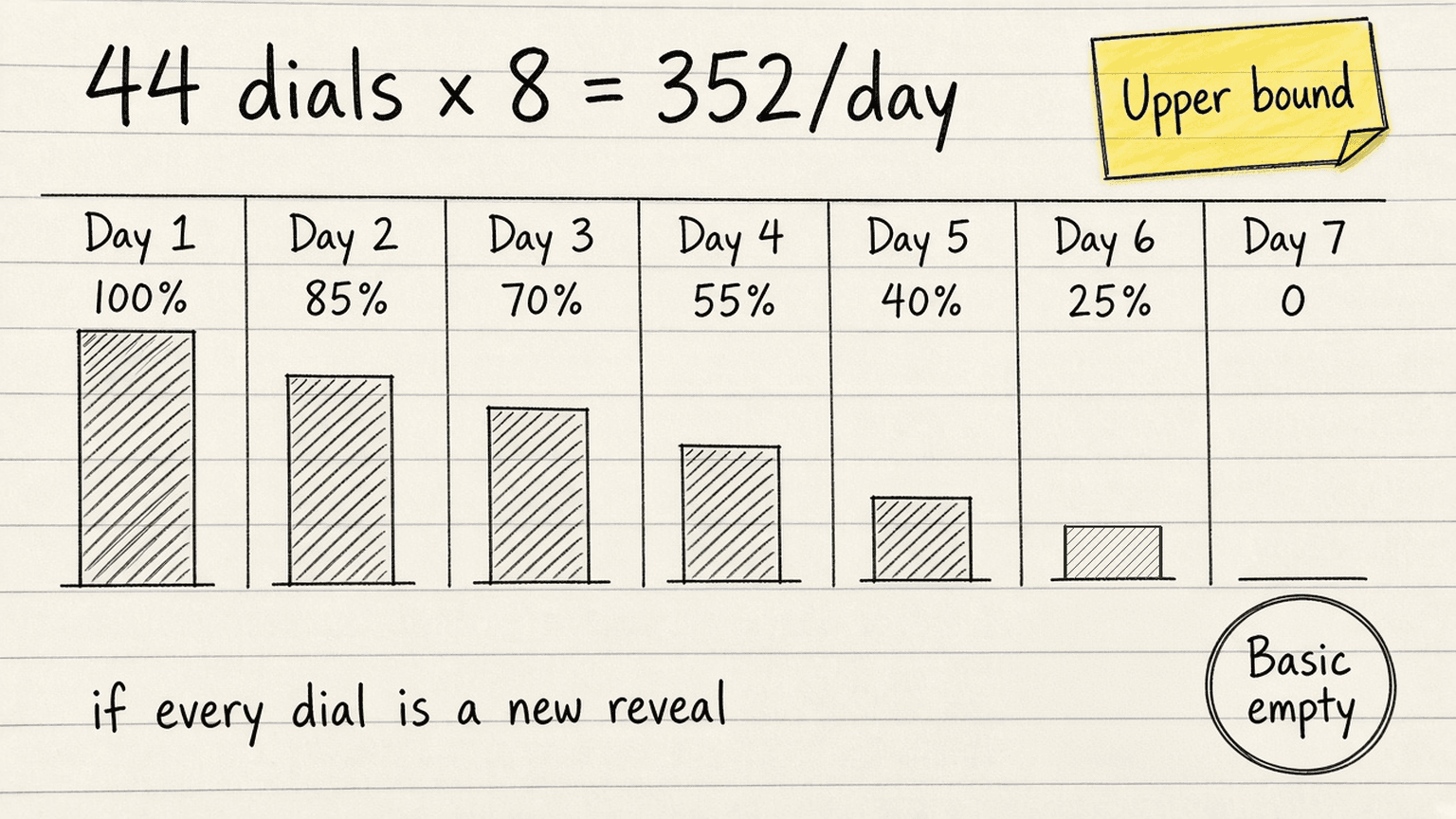
A company that sells an Apollo alternative ran this math in a blog post. Its inputs put a typical SDR at 44 phone dials a day and Apollo's Basic plan at 2,500 credits a month.
This is an upper bound. It only holds if every dial is a new reveal that finds a mobile. 44 × 8 = 352 credits a day. 2,500 ÷ 352 is about 7. So in that case, Basic's monthly credits last about 7 working days. Spent only on phones, 2,500 credits buy 312 reveals.
Real months burn slower, because calling a number you already revealed doesn't bill again. Apollo's pricing page also says credits are pooled across the team, granted upfront, and never roll over.
Check your own plan's credit grant inside Apollo before you budget. The 2,500 figure comes from a competitor, and plans change.
Mark Colgan's answer was a button.
Apollo charges 8 credits to reveal a phone number, so rather than burning credits automatically, I put a button on each contact card. The rep decides which contacts are worth the spend.
When each reveal is cheap but the monthly pool is fixed, a gate costs less than a bigger plan.
The misses cost the most
Derrick, a company that sells its own phone tool, ran 100 hard B2B profiles through several phone finders. The profiles came from large companies and public institutions. Each tool got roughly the same budget, about EUR 50.
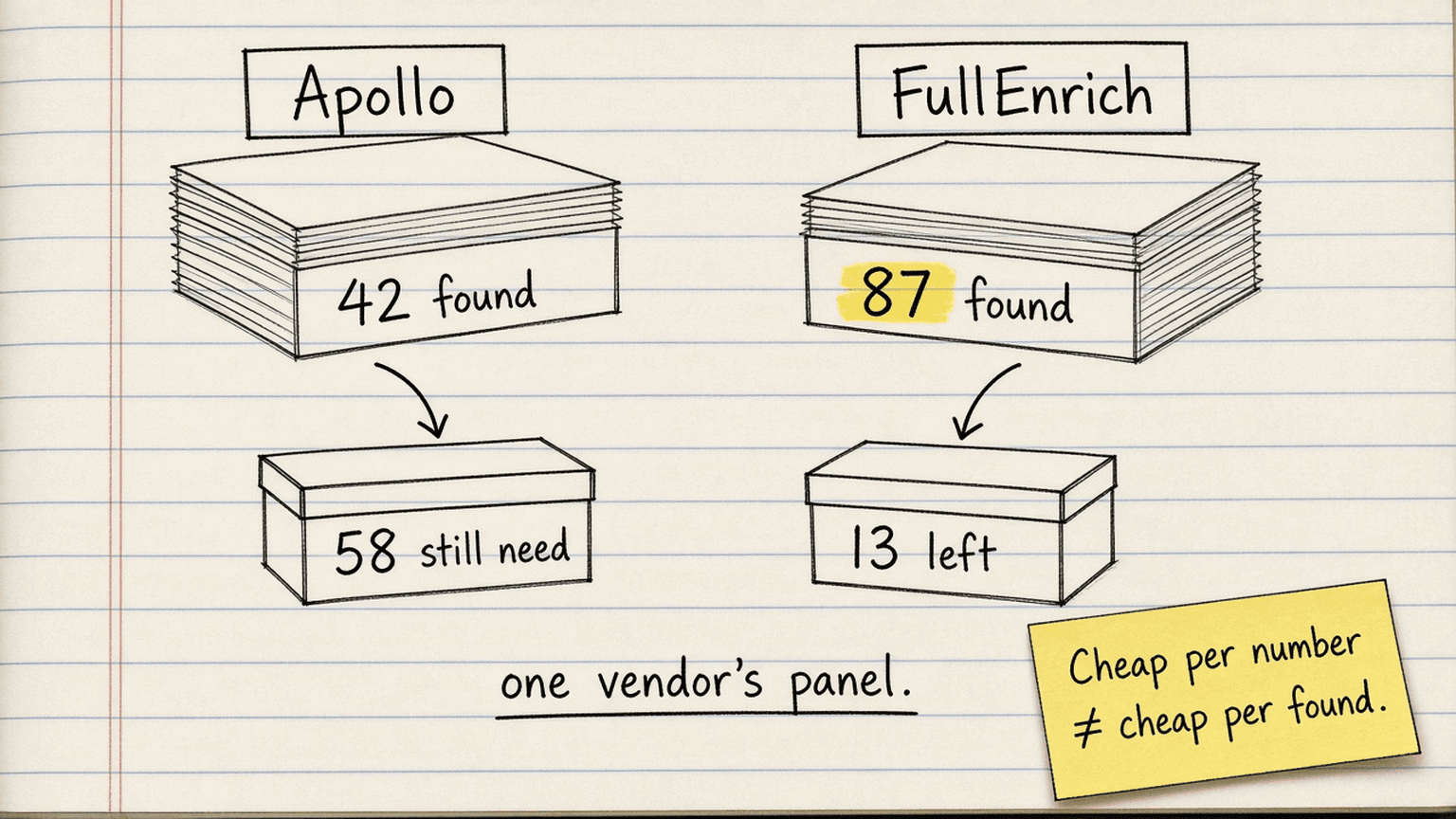
Apollo found a usable number for 42 of them, at about EUR 0.16 per number found. FullEnrich found 87, at about EUR 0.49.
That's one vendor's panel, and the vendor ranks itself. It doesn't define "usable" either. Use it for direction.
Apollo's price per number looks low. But 58 of those 100 people still have no number. Your rep still needs to reach them, so you end up buying those numbers somewhere else.
That's why cost per found mobile is the number to watch. FullEnrich charges 10 credits per mobile, which comes to $0.55 per found mobile at the 1,000-credit tier. It charges nothing when it can't verify one. BetterContact also charges 10 credits per mobile, which is $0.49 on Pro and $0.75 on Starter, and only when the number is valid. It scores each number for how likely it is to connect, and you pay only for the top group.
Run a waterfall on the misses
A waterfall means trying several data providers in order until one finds a match. Here's the order we'd run.
- Reveal in Apollo first, only for contacts a rep actually plans to call. You already pay for the seat.
- Send the misses to FullEnrich.
- Send whatever FullEnrich misses to BetterContact.
You pay a second vendor only on the hard tail. If 58 contacts come back empty from Apollo, the FullEnrich step costs at most 58 × $0.55 = $31.90. Any it can't find cost nothing.
Pick list
- FullEnrich for mobiles. It found 87 of 100 on that hard panel against Apollo's 42, and you pay only for a verified mobile. Open FullEnrich.
- Apollo for search, sequences, and the first reveal. Put reveals behind a button. Open Apollo.
- BetterContact as the backup for what FullEnrich misses. Open BetterContact.
The number to report each month is cost per found mobile. Add up phone spend across all three tools, then divide by the mobiles you actually got.
Next · Apollo credits and exports explains how email credits work · Mobile enrichment tools has more ways to find mobiles · FullEnrich vs BetterContact compares the two backups.