

September 20, 2026
Apollo credits · unlock vs leave fees, phone×8, and multi-provider burn
Visit ApolloPaying to see an email is not the same as paying when that contact leaves. Phone costs eight times email. Trying several data providers in a row can blow past a yearly seat. Credits do not roll over.
Most Apollo pricing posts show plan stickers. That is not the bill that surprises you.
The surprise is how credits work. Paying to unlock and see a contact is one credit pool. Paying when that contact leaves Apollo is another. A phone costs eight times an email. Trying several data providers in a row can burn a whole year of credits on one big list. Credits do not roll over.
This page is about those credit pools.
Two different credit pools
You spend credits to unlock an email or phone so you can see it inside Apollo. Apollo often calls that a reveal.
You spend different credits when that contact leaves Apollo. Apollo’s pricing page calls those export credits: a fee when the contact leaves. They burn on CSV, CRM sync, or other exits.
If Apollo finds people and another tool sends the mail, you pay both pools.
Phone costs eight times email
A verified email is 1 credit.
A returned phone is 8 credits. That is Apollo’s published weight.
Only unlock phones for people you will dial soon. A “just in case” phone pull on 2,000 rows is 16,000 credits before you try several providers in a row.
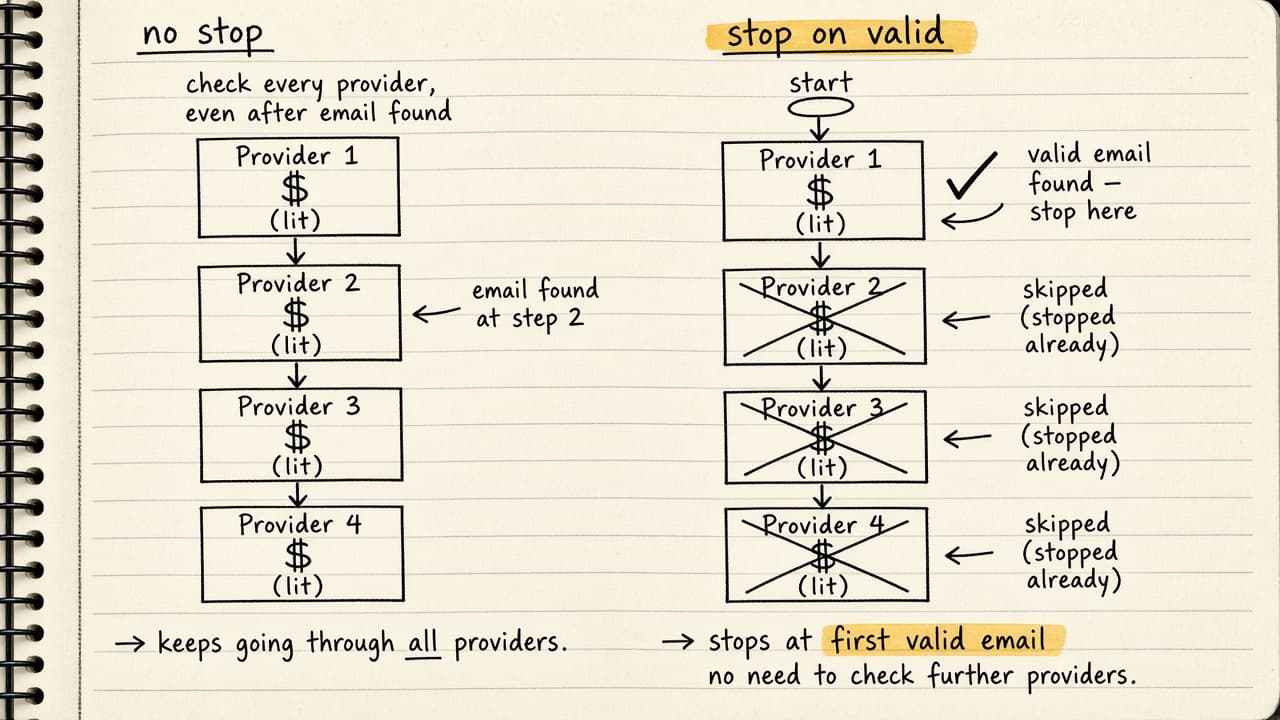
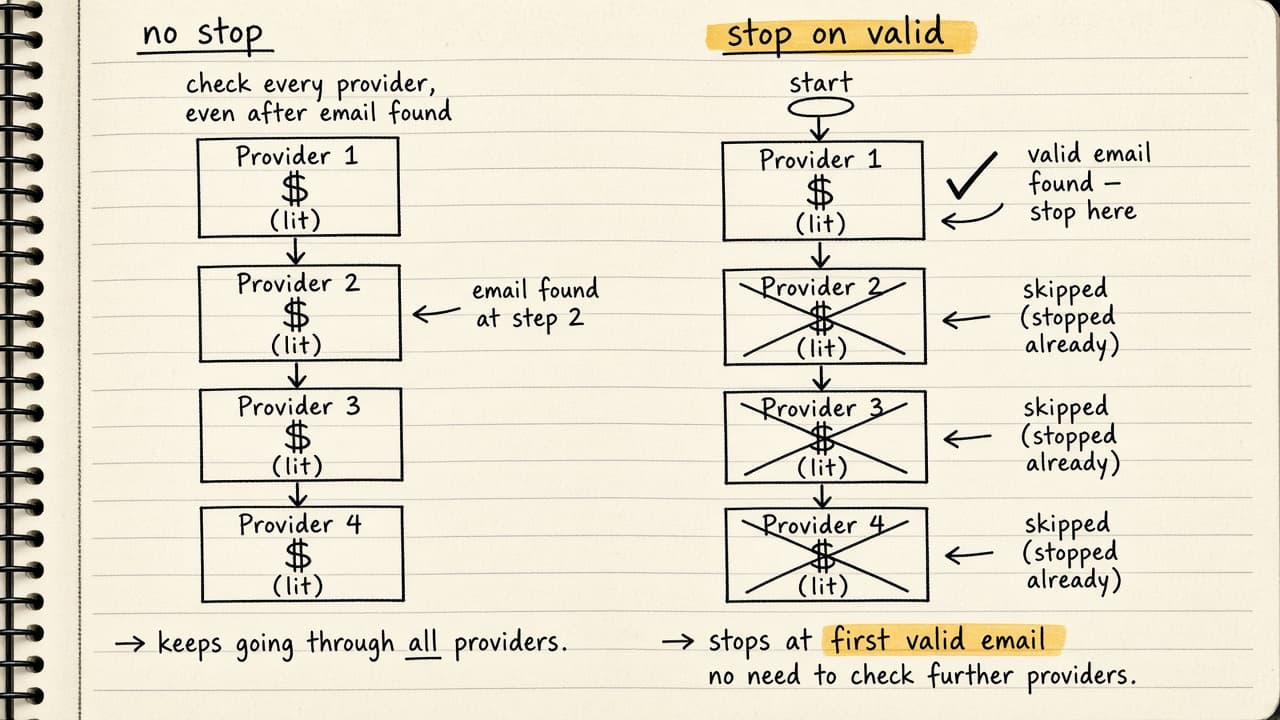
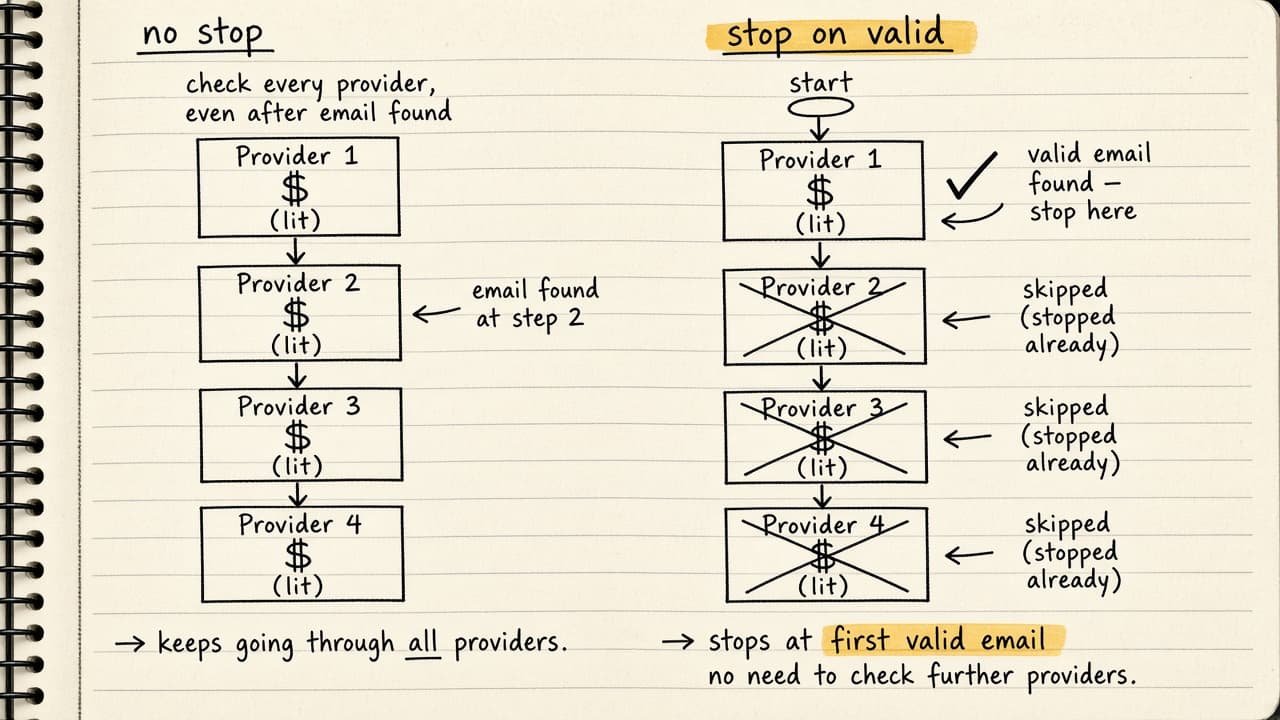
Trying several providers in a row can burn more than you think
A waterfall means Apollo tries several data providers in order until one finds a match. That costs more than a single unlock.
Apollo’s credit docs put those runs in ranges:
- Email runs are often 1 to 4 credits per row. They can run past 20.
- Phone runs are often 8 to 25. They can run past 45.
Some steps still cost credits when nothing is found. A miss is not always free.
Run a 50 to 100 row test before you trust a big list.
One 10k list can beat a yearly seat
Apollo’s own teaching example walks a 10k-row list.
Email-only unlocks on 10k rows are about 10k credits.
A phone run that tries several providers on 10k rows can land around 80k to 250k+ credits.
Basic is 30k credits per user per year. Pro is 48k. Org is 72k.
One phone-heavy push can exceed the seat. Split the list. Gate phones. Or enrich the hard slice elsewhere.
Credits do not roll over
Apollo’s help says credits expire at the end of the billing cycle.
Annual plans unlock the year’s credits at the start. Monthly plans are use-or-lose.
Time big jobs after unlock. Do not burn a year of credits in one panicked week.
Unlimited is still capped
Paying Unlimited is not infinite.
Apollo’s pricing FAQ caps it with Fair Use math: the lesser of dollars paid divided by $0.025, or 1M credits per account per year. Free-style unlimited sits lower.
Read Fair Use before you tell Finance the plan has no cap.
Big CSV uploads change multi-provider runs
Apollo turns off multi-source provider runs on CSV uploads over 50k rows.
Split big files. Credits and row limits can both stop a job.
Plan stickers (short)
Re-check Apollo’s pricing page before you lock. Stickers move.
- Free · 900 credits per seat per year
- Basic · $49 per user per month on annual · 30k credits per year
- Professional · $79 · 48k credits per year
- Organization · $119 · needs 3 seats · $357 a month floor · 72k credits per year
What to do this week
Separate unlock credits (pay to see) from leave fees (export credits).
Count how many rows truly need a phone.
Test multi-provider runs on 50 to 100 rows. Write down credits per find and per miss.
Compare that rate to your yearly allotment on a 10k plan.
Split CSVs over 50k. Schedule big jobs after annual unlock.
Read Fair Use if the card says Unlimited.
When the math is clear, open Apollo and run the test on your own list.
Next · Apollo has our full notes on the tool · Apollo vs ZoomInfo helps if you need more phone numbers to call · Apollo to cold outbound shows how to move your list into a sending tool.